The opportunity is clear.
The technology is ready.
Arctic shipping routes are growing fast — cutting voyage distances by up to 40% compared to traditional passages.
But ice navigation remains one of the most demanding challenges in maritime operations,
relying heavily on human expertise under extreme conditions.
Advances in AI-driven path planning, real-time sensor fusion, and autonomous decision-making
can make ice navigation safer, more efficient, and accessible to a broader range of vessels —
while reducing fuel consumption and crew risk.
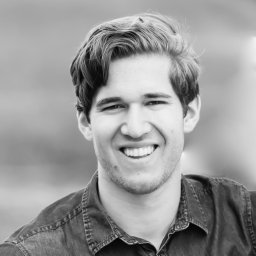
Rodrigue de Schaetzen
Co-founder · Robotics & navigation
Second-year PhD student at Mila, in Prof. Liam Paull's Robotics
and Embodied AI Lab, where he works on planning and control for
autonomous mobile robots. Lead author of AUTO-IceNav,
with prior graduate work at the University of Waterloo focused on marine vessel
navigation in ice. Recent work includes the top-scoring entry in the
2025 Waymo Vision-based End-to-End Driving Challenge.
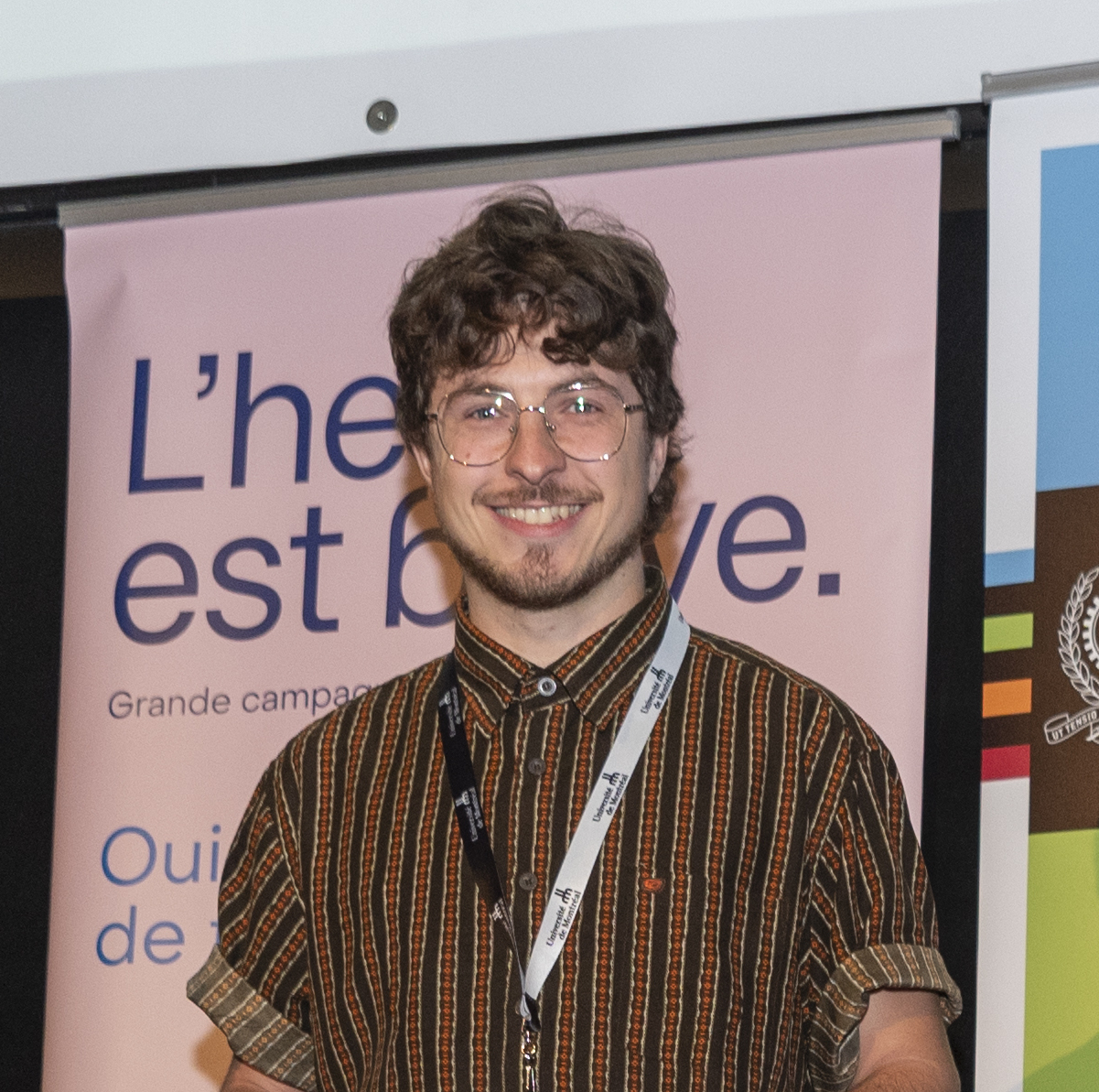
Gabriel Sasseville
Co-founder · World modeling & trajectory optimization
First-year PhD student in Computer Science at Mila, working on
world models and trajectory optimization for the safe deployment
of AI systems in the real world. Background in physics (M.Sc. Astrophysics, B.Sc.
Computer Science & Physics) and prior research at Environment and
Climate Change Canada on LSTM-based hydrological forecasting.
Advisors
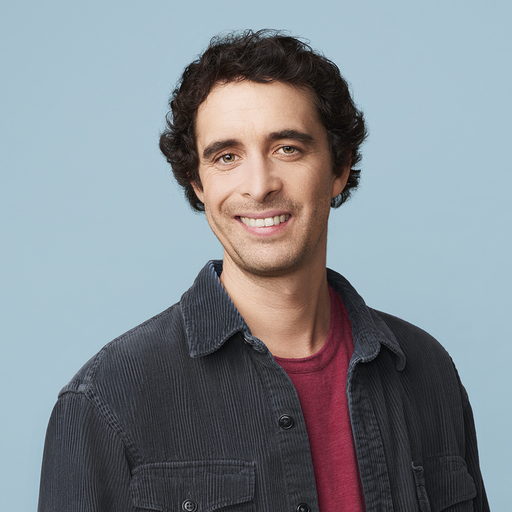
Pierre-Luc Bacon
Scientific Advisor · Reinforcement learning & optimal control
Associate Professor at Mila and Université de Montréal,
and CIFAR AI Chair. His research advances
reinforcement learning and optimal control, with a
particular focus on the curse of the horizon and how representation
learning can overcome it. Applications span energy systems, materials
discovery, and drug development.
Kevin Murrant
Technical Advisor · Marine autonomy & ice testing
PhD, PEng. Autonomous systems researcher at
Memorial University in St. John's, working on
real-time navigation, control, and machine-vision situational
awareness for surface vessels in ice-covered waters.
Co-author on AUTO-IceNav with hands-on experience
running physical trials at the NRC ice tank.
Research
Our team of robotics and AI researchers at Mila – Quebec AI Institute has
published peer-reviewed work on autonomous ice navigation, including
AUTO-IceNav
— a real-time path planning system for ships in ice, validated in physical trials at the
NRC Offshore Engineering Basin and published in
IEEE Transactions on Robotics (2025) and IEEE International Conference on Robotics and Automation (2023).